TCPA and DNC Compliance Checklist for VoIP Call Centers

TCPA and DNC Compliance Checklist for VoIP Call Centers

Running an outbound call center in 2026 without a documented TCPA and DNC compliance process isn’t just risky — it’s a financial liability that can shut a business down overnight. TCPA class action filings have surged in recent years, and a single non-compliant campaign touching a few thousand numbers can generate seven-figure exposure before anyone on your team even realizes there’s a problem.

This guide breaks down exactly what TCPA and DNC compliance require for VoIP call centers right now, what a violation actually costs, and a practical checklist you can run your operation against today.

What TCPA and DNC Compliance Actually Cover

The Telephone Consumer Protection Act (TCPA) and the Do Not Call (DNC) rules are often mentioned together, but they govern slightly different things, and most outbound call centers need to satisfy both.

The TCPA regulates how you’re allowed to contact someone — consent requirements, the use of autodialers and prerecorded or AI-generated voices, permitted calling hours, and a consumer’s right to sue directly if those rules are broken. DNC compliance governs whether you’re allowed to contact someone at all, based on the National Do Not Call Registry, state-level “mini-DNC” lists, and your own internal suppression list of people who’ve already asked not to be called.

A call center can violate one without violating the other, which is exactly why both need separate, documented processes rather than a single “we scrub our lists” policy.

What a Violation Actually Costs

The numbers here are worth internalizing because they change how seriously a call center needs to take this:

Federal TCPA violations carry $500 per call for ordinary violations, rising to $1,500 per call if a court finds the violation willful or knowing. There is no annual or per-campaign cap, which means a single bad campaign of 10,000 calls can theoretically expose a business to millions of dollars in statutory damages. DNC-specific violations under the FTC’s Telemarketing Sales Rule can run even higher, with maximum penalties reaching into the tens of thousands of dollars per call depending on the specific violation. State-level “mini-TCPA” laws in places like Connecticut, Florida, Oklahoma, and Washington often add their own penalty structures on top of the federal floor.

Beyond the per-call fines, TCPA allows a private right of action — meaning any individual consumer can personally sue, and they don’t need the FCC or FTC to act first. That’s the mechanism behind the wave of TCPA class actions, which have produced settlements regularly landing in the millions of dollars, with at least one case reaching well into nine figures.

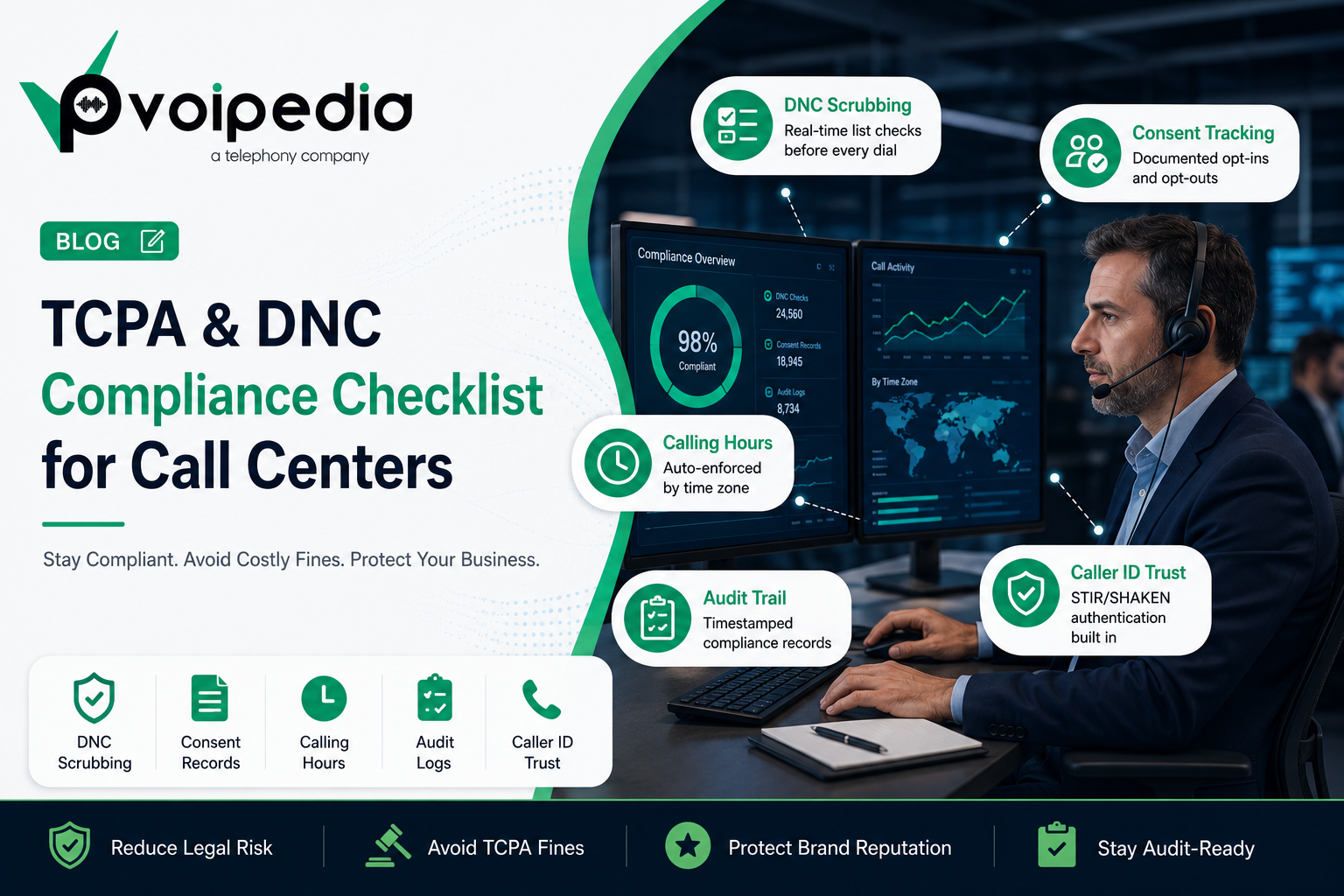
The 2026 TCPA and DNC Compliance Checklist

1. Scrub every list against the National DNC Registry — and keep it current

The National Do Not Call Registry now holds over 240 million numbers. Lists should be scrubbed within 31 days of any calling campaign at minimum; many compliance-first operations scrub in real time at the point of dial rather than relying on a monthly batch process. If you’re running VICIdial or a similar dialer, don’t load the entire federal registry directly into the platform’s internal DNC table — at that scale it will degrade hopper performance. Pre-scrub through a dedicated third-party DNC service before import instead.

2. Maintain a separate internal DNC list — and treat it as permanent

Every business that places outbound calls is required to maintain its own internal Do Not Call list, independent of the federal registry. When a consumer says “stop calling me,” “take me off your list,” or anything equivalent, that request needs to be captured by the agent immediately and pushed into a suppression system shared across every team and every vendor touching that contact — not left sitting in a single agent’s notes. Internal DNC entries should be retained for a minimum of five years; some states require longer.

3. Check state-specific DNC and telemarketing laws separately

The TCPA does not preempt state law, and a growing number of states have passed their own telemarketing rules that are stricter than the federal baseline — generally referred to as “mini-TCPAs.” States including California, Florida, Oklahoma, Texas, Washington, and Oregon have either their own DNC registries or tighter calling-hour and consent requirements. A campaign that’s fully compliant federally can still expose you to liability in any of these states if you’re not checking separately.

4. Respect calling hours — based on the consumer’s time zone, not yours

Outbound telemarketing calls are restricted to 8:00 a.m. to 9:00 p.m. in the called party’s local time zone under federal rules, and several states cut that window shorter, often ending at 8:00 p.m. This needs to be enforced by area code or, better, by verified location data rather than assumed from the area code alone, since mobile numbers increasingly don’t reflect where someone actually lives.

5. Get documented consent — and don’t rely on resold or shared consent

Prior express written consent is required before using an autodialer or prerecorded/AI-generated voice to contact a mobile number. Oral consent generally isn’t sufficient for marketing calls. As of the 2025 “one-to-one consent” changes, consent obtained by one company generally can’t be resold or shared with unrelated businesses — each company in a lead chain needs its own direct consent from the consumer. If your leads come from a third-party generator, this is one of the most common places call centers get exposed.

6. Understand what counts as an autodialer in your jurisdiction

Following the Supreme Court’s Facebook v. Duguid ruling, the federal definition of an Automatic Telephone Dialing System narrowed to systems using a random or sequential number generator — which excludes most modern predictive dialers that call from a stored list. However, several states interpret “autodialer” more broadly than the federal standard, so a dialer setup that’s compliant federally may still carry risk in certain states. Manual or manually-approved dialing — where a human reviews and approves each call before it’s placed — remains the lowest-risk approach for cell phone outreach.

7. Process opt-outs within 10 business days, every time

Whether the opt-out comes through a call, a text reply (“STOP,” “QUIT,” “UNSUBSCRIBE,” “CANCEL”), or any other channel, FCC rules require it to be honored within 10 business days. The opt-out needs to flow into your suppression list immediately and apply across every channel and every campaign — not just the one it came in on.

8. Verify numbers haven’t been reassigned

Nearly 100,000 phone numbers get reassigned to new owners every day in the US, and consent is tied to the person, not the number. Calling a number whose original owner gave consent — but who has since given the number up — creates fresh TCPA liability even though you technically had consent at some point. Numbers should be periodically re-validated, especially on lists older than a few months.

9. Keep detailed, timestamped records of everything

If a complaint or lawsuit comes in, your documentation is your defense — and gaps in documentation tend to be treated the same as gaps in compliance. At minimum, maintain: consent records (when and how each contact opted in), opt-out records (when and through what channel each opt-out was received and honored), DNC scrub logs (timestamped, showing which lists were checked and how many numbers were suppressed), and campaign records (which numbers were called, by which agent, when, and the outcome). Most compliance-focused dialer platforms log this automatically; doing it manually in a spreadsheet is a documentation problem waiting to surface.

10. Pair DNC and TCPA compliance with caller ID authentication

DNC scrubbing and consent management solve the legal side of outbound compliance, but they don’t address answer rates — and a growing share of legitimate outbound calls get mislabeled as “Spam Likely” by carrier filters regardless of consent status. Running STIR/SHAKEN call authentication alongside your DNC and TCPA program protects your caller ID reputation and helps ensure compliant calls actually get answered. We covered the mechanics of this in detail in our STIR/SHAKEN compliance guide.

Building This Into Your VoIP Infrastructure

A compliance checklist only works if it’s enforced automatically rather than relying on individual agents to remember each rule on every call. That generally means your dialer needs to handle real-time DNC scrubbing at the point of dial, calling-hour restrictions tied to verified caller location, automatic suppression-list updates the moment an opt-out is logged, and audit-ready records for every call placed.

This is also where the underlying VoIP and dialer infrastructure matters as much as the policy itself. A PBX and outbound calling setup built with compliance controls at the infrastructure layer removes the guesswork — and the liability — that comes with trying to bolt compliance onto a system that wasn’t designed for it.

Final Word

TCPA and DNC compliance isn’t a one-time setup — it’s an ongoing operational discipline, especially as state-level rules keep expanding and enforcement keeps intensifying. The call centers that stay out of trouble are the ones that treat list hygiene, consent tracking, and documentation as part of daily operations, not as a once-a-quarter audit.

If you’re evaluating whether your current dialer and PBX setup can actually support this level of compliance, get in touch with our team — we help call centers build outbound infrastructure that’s compliant by design.

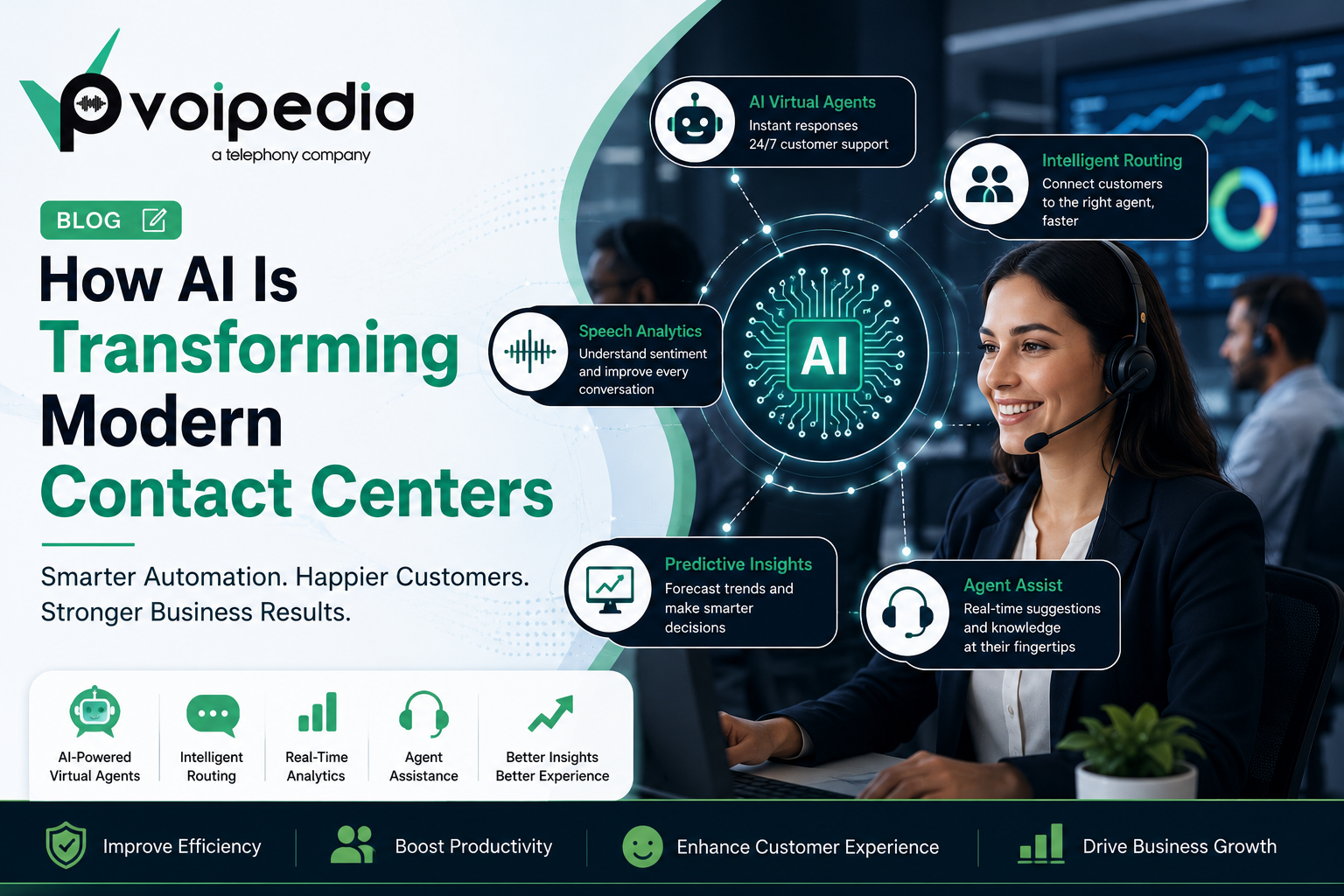
How AI Is Transforming Modern Contact Centers

Customer expectations have changed dramatically over the past few years. People no longer want to wait on hold for long periods, repeat information to multiple agents, or deal with slow support systems. Businesses are under pressure to provide faster responses, personalized experiences, and 24/7 customer service across multiple communication channels.

This shift is exactly why AI is transforming modern contact centers.

Artificial Intelligence is no longer just an experimental technology in customer support. Today, AI-powered systems are helping contact centers automate repetitive tasks, improve agent performance, reduce operational costs, and deliver better customer experiences at scale.

From AI voice assistants to real-time analytics and predictive routing, modern contact centers are evolving faster than ever before.

What Is AI in Contact Centers?

AI in contact centers refers to the use of artificial intelligence technologies to automate, analyze, and optimize customer communication processes.

AI-powered systems can:

  • Understand customer intent
  • Route calls intelligently
  • Analyze conversations in real time
  • Automate repetitive support tasks
  • Detect customer sentiment
  • Improve agent productivity
  • Predict customer behavior

These technologies work across:

  • Voice calls
  • Live chat
  • SMS
  • Email
  • Social media
  • Omnichannel communication platforms

Modern cloud communication systems are increasingly integrating AI into their infrastructure to improve efficiency and customer satisfaction.

You can also learn more about cloud communication systems in our article:
https://thevoipedia.com/cloud-pbx-vs-traditional-phone-systems/

Why Contact Centers Are Adopting AI

Traditional contact centers face several major challenges:

  • High operational costs
  • Long wait times
  • Agent burnout
  • Poor customer experiences
  • Inconsistent service quality
  • Rising support volumes

AI helps solve many of these problems by automating repetitive workflows and improving decision-making processes.

According to IBM, AI-powered customer support systems can significantly improve efficiency while reducing response times.
https://www.ibm.com/topics/contact-center-ai

AI-Powered Virtual Agents and Chatbots

One of the biggest changes in modern contact centers is the rise of AI virtual agents.

AI chatbots and voice bots can:

  • Answer common customer questions
  • Handle account inquiries
  • Process payments
  • Schedule appointments
  • Provide order updates
  • Resolve simple support requests

Unlike traditional IVR systems, modern AI assistants use natural language processing (NLP) to understand customer intent and respond conversationally.

This allows businesses to provide instant support without requiring human agents for every interaction.

Real-Time Speech Analytics

AI-powered speech analytics is transforming how businesses monitor customer interactions.

Modern AI systems can analyze conversations in real time to identify:

  • Customer sentiment
  • Compliance risks
  • Agent performance
  • Escalation triggers
  • Sales opportunities
  • Customer frustration

Supervisors can receive live alerts during calls, allowing them to intervene before problems escalate.

Speech analytics also helps businesses improve training and quality assurance processes.

Intelligent Call Routing

Traditional call routing often sends customers through complex menus before connecting them to the right department.

AI-driven routing systems analyze:

  • Customer intent
  • Previous interactions
  • Caller history
  • Language preferences
  • Sentiment data

This helps route calls to the most appropriate agent faster, improving both efficiency and customer satisfaction.

Businesses looking to optimize call delivery can also benefit from advanced VoIP routing strategies:
https://thevoipedia.com/what-is-call-routing/

AI Improves Agent Productivity

AI is not replacing agents entirely — in many cases, it is helping them work more efficiently.

Modern AI systems assist agents by:

  • Generating real-time call summaries
  • Suggesting responses
  • Displaying customer history
  • Providing knowledge base recommendations
  • Automating after-call work
  • Transcribing conversations automatically

This reduces manual workload and allows agents to focus more on customer engagement.

Predictive Analytics in Contact Centers

AI-powered predictive analytics helps businesses forecast customer behavior and operational trends.

Contact centers can use AI to predict:

  • Call volume spikes
  • Customer churn risks
  • Staffing requirements
  • Sales opportunities
  • Customer satisfaction levels

This helps businesses make smarter operational decisions while improving resource management.

AI Voice Assistants Are Replacing Legacy IVR Systems

Traditional IVR systems often frustrate customers because they rely on rigid menu structures.

Modern AI voice assistants provide a much more natural experience by allowing callers to speak conversationally.

Instead of:
“Press 1 for billing.”

Customers can simply say:
“I need help with my payment.”

AI systems can then understand intent and route the call appropriately.

This creates faster and more personalized customer experiences.

AI Helps Reduce Operational Costs

One major reason businesses invest in AI is cost reduction.

AI systems help reduce:

  • Agent workload
  • Average handling time
  • Call abandonment rates
  • Training costs
  • Repetitive manual tasks

This allows contact centers to scale operations more efficiently without dramatically increasing staffing costs.

AI and Omnichannel Customer Support

Modern customers expect support across multiple channels.

AI-powered omnichannel systems can manage interactions across:

  • Voice
  • Email
  • Chat
  • SMS
  • WhatsApp
  • Social media

AI helps maintain consistent customer experiences across all communication channels.

Challenges of AI in Contact Centers

Although AI offers significant advantages, implementation also comes with challenges.

Data Privacy and Security

AI systems often process sensitive customer information, making data protection critical.

Businesses must ensure:

  • Secure infrastructure
  • Regulatory compliance
  • Data encryption
  • Access control

Integration Complexity

Many businesses still operate on legacy communication systems that may not integrate easily with modern AI platforms.

Migration planning is often necessary.

Human Oversight Is Still Important

AI can automate many tasks, but human agents remain essential for:

  • Complex support cases
  • Emotional interactions
  • High-value sales conversations
  • Escalation handling

The best contact centers combine AI efficiency with human expertise.

The Future of AI in Contact Centers

AI adoption in contact centers will continue growing rapidly over the next few years.

Future innovations may include:

  • Emotion-aware AI systems
  • Fully conversational voice agents
  • Real-time language translation
  • Hyper-personalized customer interactions
  • Advanced predictive customer support
  • AI-driven workforce optimization

Businesses that adopt AI early will likely gain a significant competitive advantage in customer experience and operational efficiency.

Final Thoughts

AI is fundamentally transforming modern contact centers.

From intelligent routing and speech analytics to virtual agents and predictive analytics, AI technologies are helping businesses improve customer experiences while reducing operational complexity.

As customer expectations continue evolving, contact centers that rely entirely on traditional systems may struggle to remain competitive.

The future of customer communication is increasingly AI-driven, data-focused, and highly automated.

For businesses looking to scale customer support operations efficiently, AI is no longer optional — it is becoming a core part of modern contact center infrastructure.

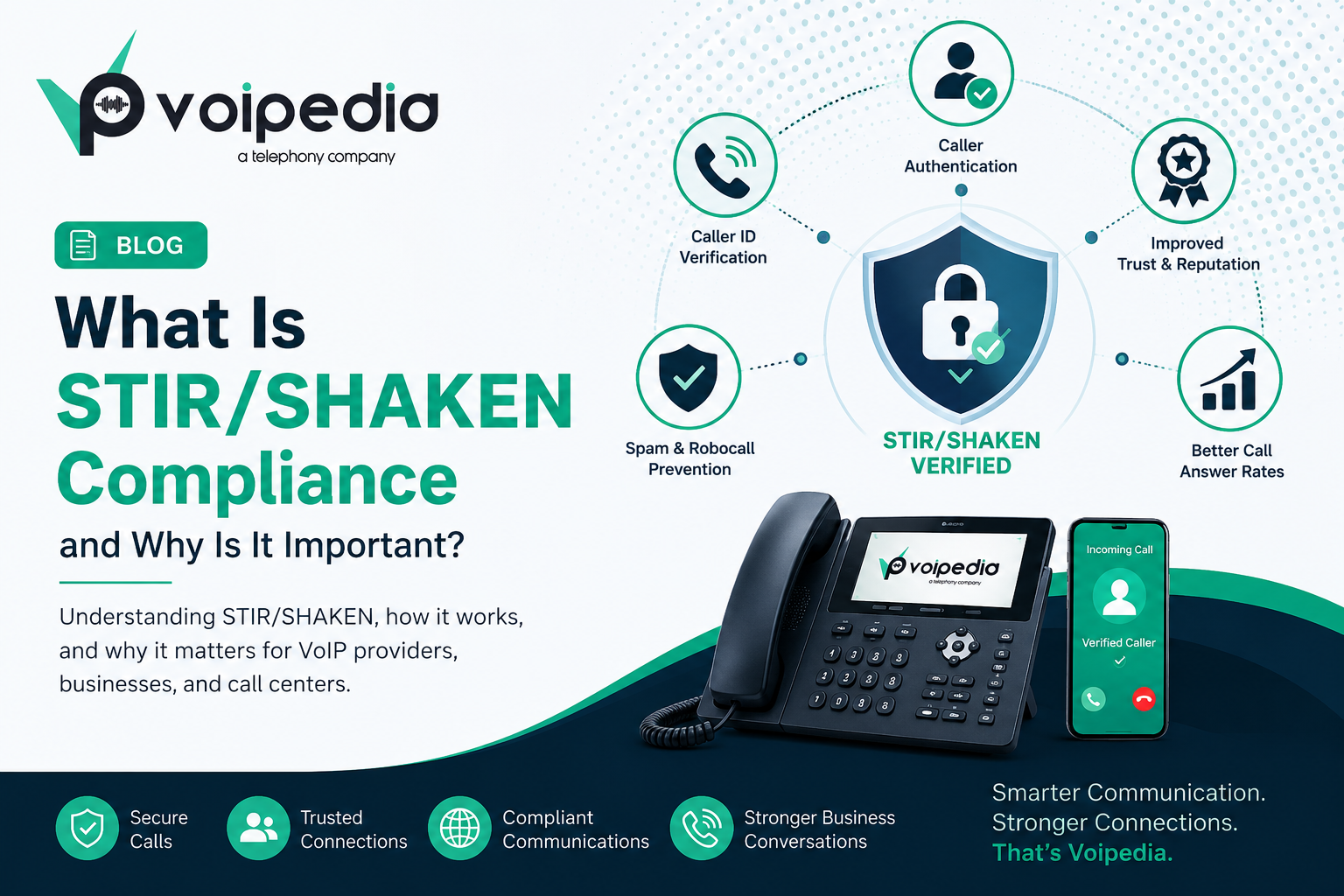
What Is STIR/SHAKEN Compliance and Why Is It Important?

Businesses today depend heavily on voice communication, but trust in phone calls has declined dramatically over the last few years. Spam calls, robocalls, and caller ID spoofing have made customers hesitant to answer unknown numbers. This growing telecom problem is exactly why STIR/SHAKEN compliance has become essential for modern VoIP providers, SIP carriers, contact centers, and enterprise communication systems.

STIR/SHAKEN is designed to verify caller identity, reduce spoofed calls, and help telecom providers restore trust in voice communication. As regulations tighten and carriers become stricter about spam prevention, businesses that ignore STIR/SHAKEN compliance may face lower answer rates, spam labeling, and reduced call deliverability.

If your company uses VoIP services or outbound calling systems, understanding how STIR/SHAKEN works is no longer optional.

You can also learn more about modern communication infrastructure in our guide on
https://thevoipedia.com/cloud-pbx-vs-traditional-phone-systems/

What Is STIR/SHAKEN Compliance?

STIR/SHAKEN is a caller authentication framework used to verify that a phone call is genuinely coming from the number displayed on caller ID.

The framework combines two telecom standards:

  • STIR — Secure Telephone Identity Revisited
  • SHAKEN — Signature-based Handling of Asserted Information Using toKENs

Together, these standards help telecom providers digitally sign and verify calls across IP-based VoIP networks.

The Federal Communications Commission (FCC) introduced STIR/SHAKEN as part of its broader effort to reduce illegal robocalls and caller ID spoofing.
https://www.fcc.gov/call-authentication

Why STIR/SHAKEN Was Introduced

Before STIR/SHAKEN, scammers could easily manipulate caller IDs using VoIP systems. Fraudsters often impersonated:

  • Banks
  • Government agencies
  • Healthcare providers
  • Insurance companies
  • Customer support teams

As spoofing became more common, customers stopped trusting incoming calls. Even legitimate businesses began struggling with declining answer rates.

Telecom providers and regulators needed a scalable solution that could authenticate caller identity across modern SIP networks. STIR/SHAKEN was created to solve this growing issue.

Businesses using scalable communication platforms like modern cloud PBX systems are increasingly adopting authentication frameworks to improve call trust and delivery.
https://thevoipedia.com/global-voip-solutions-businesses/

How STIR/SHAKEN Works

The STIR/SHAKEN framework works through digital certificates and SIP authentication.

Here’s a simplified process:

  1. A VoIP call is initiated.
  2. The originating provider verifies the customer.
  3. The provider digitally signs the call.
  4. A SIP Identity header and PASSporT token are attached.
  5. The receiving carrier verifies the signature.
  6. The call receives a trust verification level.

This entire process happens in milliseconds without affecting audio quality or call performance.

Understanding STIR/SHAKEN Attestation Levels

One of the most important aspects of STIR/SHAKEN compliance is attestation.

Attestation levels indicate how confidently the originating provider can verify the caller identity.

Full Attestation (A-Level)

The provider:

  • Knows the customer
  • Authenticated the customer
  • Confirms ownership of the phone number

This is the highest trust level.

Partial Attestation (B-Level)

The provider knows the customer but cannot fully verify ownership of the caller ID number.

Gateway Attestation (C-Level)

The provider received the call from another network and cannot verify the original caller.

Calls with lower attestation levels are more likely to trigger spam analytics systems.

More technical details about STIR/SHAKEN standards can be found here:
https://sti-ga.atis.org/

Why STIR/SHAKEN Compliance Is Important

Better Call Answer Rates

One of the biggest benefits of STIR/SHAKEN compliance is improved call answer rates.

Modern carriers increasingly prioritize authenticated traffic. Calls without verification are more likely to:

  • Display “Spam Likely”
  • Be blocked
  • Receive lower trust scores
  • Experience poor connection rates

For outbound sales teams and call centers, this directly impacts campaign performance and revenue generation.

Caller ID Spoofing Prevention

Caller ID spoofing damages customer trust and brand reputation.

STIR/SHAKEN helps telecom providers reduce fraudulent impersonation attempts and improve the credibility of legitimate business calls.

Regulatory Compliance

In the United States, the FCC requires many voice service providers to implement STIR/SHAKEN on IP-based networks as part of robocall mitigation requirements.

Failure to comply can create operational and regulatory risks for telecom providers and VoIP businesses.

Additional information about telecom identity frameworks can be found here:
https://www.iconectiv.com/stir-shaken

Improved Carrier Reputation

Carriers constantly analyze traffic quality.

Businesses sending authenticated traffic often experience:

  • Better routing quality
  • Improved termination rates
  • Lower spam labeling
  • Stronger carrier relationships

This is especially important for companies operating large outbound call campaigns.

Why Call Centers Need STIR/SHAKEN

Modern contact centers rely heavily on outbound communication.

Without caller authentication, even legitimate business calls may appear suspicious to recipients. This results in:

  • Lower pickup rates
  • Reduced agent productivity
  • Increased spam labeling
  • Poor campaign performance

STIR/SHAKEN compliance helps contact centers maintain trusted outbound communication while improving answer rates.

Common Challenges with STIR/SHAKEN

Legacy Infrastructure

Older telecom systems based on TDM or SS7 networks may face interoperability challenges when integrating STIR/SHAKEN.

International Traffic

Cross-border authentication remains complex because countries implement different telecom verification standards.

Spam Analytics Still Matter

Even authenticated calls can still be flagged if dialing behavior appears suspicious.

Carriers also evaluate:

  • Complaint rates
  • Call frequency
  • Traffic patterns
  • Consumer feedback

This means businesses must combine authentication with responsible outbound practices.

Does STIR/SHAKEN Stop All Robocalls?

No.

STIR/SHAKEN significantly reduces caller ID spoofing, but it does not eliminate all robocalls.

Scammers may still:

  • Use valid phone numbers
  • Exploit compromised systems
  • Route traffic internationally
  • Abuse non-IP networks

However, STIR/SHAKEN remains one of the most important telecom security improvements introduced in recent years.

Best Practices for STIR/SHAKEN Compliance

Businesses can improve their telecom reputation by:

  • Using verified caller IDs
  • Maintaining compliant dialing practices
  • Monitoring spam analytics
  • Working with trusted SIP carriers
  • Registering outbound campaigns
  • Avoiding aggressive robocall behavior

The Future of STIR/SHAKEN

The telecom industry continues evolving toward stronger caller verification systems.

Future developments may include:

  • Verified branded calling
  • Rich call data
  • AI-driven fraud prevention
  • Enhanced cross-border authentication
  • Advanced telecom identity frameworks

The long-term goal is clear: restore trust in voice communication.

Final Thoughts

STIR/SHAKEN compliance has become a critical part of modern VoIP infrastructure.

As robocalls and caller ID spoofing continue affecting the telecom industry, businesses must prioritize authenticated voice communication to maintain answer rates, customer trust, and carrier reputation.

For VoIP providers, SIP trunk operators, cloud PBX platforms, and enterprise contact centers, STIR/SHAKEN is no longer just a regulatory requirement — it is becoming a business necessity.

Cloud PBX vs Traditional Phone Systems: Why Modern Businesses Are Making the Switch

Introduction

Business communication has undergone a fundamental transformation over the past decade. What was once dominated by hardware-heavy, location-bound telephone systems has now evolved into flexible, cloud-based infrastructures that support global operations in real time.

For organizations evaluating their communication stack, the decision is no longer whether to modernize—but how quickly they can transition to a more scalable and efficient system.

This article explores the differences between traditional phone systems and cloud-based PBX solutions, and why companies are increasingly choosing providers like Voipedia to power their communication infrastructure.

What Is a Traditional Phone System?

Traditional telephony systems rely on physical Private Branch Exchange (PBX) hardware installed on-premise. These systems route calls through dedicated lines and require ongoing maintenance, upgrades, and operational oversight.

While historically reliable, they present several limitations:

  • High upfront capital expenditure
  • Limited scalability
  • Geographic constraints
  • Complex maintenance requirements

As businesses expand and adopt remote or hybrid work models, these limitations become increasingly restrictive.

What Is Cloud PBX?

Cloud PBX is a software-based communication system hosted on remote servers and delivered via the internet. Instead of managing physical infrastructure, businesses can access enterprise-grade telephony features through a centralized platform.

Core capabilities include:

  • Virtual call routing and IVR systems
  • Real-time analytics and reporting
  • Multi-device support (desktop, mobile, softphone)
  • Seamless integration with CRM and third-party tools

This shift eliminates hardware dependency and enables businesses to operate with greater agility.

Key Differences: Cloud PBX vs Traditional Systems

Feature Traditional PBX Cloud PBX
Infrastructure On-premise hardware Cloud-based
Scalability Limited Highly scalable
Setup Time Weeks Hours or days
Maintenance Manual & costly Managed by provider
Remote Access Restricted Fully accessible
Cost Structure High upfront cost Subscription-based

The contrast clearly highlights why cloud-based systems are better aligned with modern business needs.

Why Businesses Are Moving to Cloud PBX

1. Scalability Without Complexity

Cloud PBX allows organizations to scale operations instantly. Whether adding new users, expanding into new regions, or launching new campaigns, the infrastructure adapts without requiring additional hardware.

2. Cost Efficiency

Traditional systems involve significant capital investment and ongoing maintenance costs. Cloud PBX operates on a predictable subscription model, reducing financial risk and improving budget control.

3. Global Accessibility

Modern businesses are no longer confined to a single location. Cloud PBX enables teams to operate from anywhere while maintaining a unified communication system.

This is particularly valuable for:

  • Remote teams
  • International call centers
  • Distributed sales operations

4. Advanced Features and Automation

Cloud-based systems offer capabilities that are difficult or expensive to implement in traditional setups:

  • Intelligent call routing
  • Automated IVR systems
  • Call recording and analytics
  • Performance tracking dashboards

These features enhance both operational efficiency and customer experience.

5. Faster Deployment

Deploying a traditional PBX system can take weeks. In contrast, cloud PBX solutions can be implemented in a matter of hours, allowing businesses to go live quickly and respond to market demands.

How Voipedia Delivers Cloud PBX at Scale

Voipedia’s cloud PBX platform is designed to meet the needs of modern enterprises and high-volume communication environments.

Key advantages include:

  • Customizable workflows: Tailor call routing and system behavior to match business processes
  • High-quality voice infrastructure: Ensures consistent call clarity across regions
  • Global number coverage: Enables businesses to establish a local presence worldwide
  • Integrated communication stack: Combines voice, messaging, and connectivity into one platform

This integrated approach allows businesses to manage their entire communication ecosystem through a single provider.

Use Cases Across Industries

Cloud PBX is not limited to one sector. Its flexibility makes it suitable for a wide range of industries:

Call Centers

Manage high call volumes with intelligent routing and performance analytics.

E-commerce

Provide real-time customer support and order updates through integrated communication channels.

Financial Services

Ensure secure, reliable communication with clients while maintaining compliance standards.

Healthcare

Enable appointment scheduling, reminders, and patient communication with minimal latency.

Future Outlook: Communication as a Strategic Asset

The role of communication technology is evolving from a support function to a core business driver. Organizations that invest in scalable, cloud-based systems gain a competitive advantage through:

  • Faster response times
  • Improved customer engagement
  • Data-driven decision making
  • Reduced operational overhead

Cloud PBX is no longer just an upgrade—it is a strategic necessity.

Conclusion

The transition from traditional phone systems to cloud PBX represents a fundamental shift in how businesses communicate, operate, and scale.

With its advanced infrastructure and comprehensive service offering, Voipedia enables organizations to modernize their communication stack and prepare for future growth.

For businesses still relying on legacy systems, the question is no longer whether to switch—but how soon they can take advantage of the efficiencies and capabilities that cloud-based communication provides.

Global VoIP Solutions for Businesses: How Voipedia Powers Modern Call Centers

Introduction

VoIP PBX solutions are transforming how modern businesses manage communication. In today’s digital environment, companies need scalable, flexible, and cost-efficient systems to handle global operations efficiently.

Cloud-based VoIP platforms have emerged as the foundation for this transformation. Among these providers, Voipedia delivers a comprehensive suite of communication solutions designed specifically for enterprises, call centers, and telecom-driven businesses.

This article examines how Voipedia supports modern communication needs and why its infrastructure is increasingly relevant in a competitive global market.

The Evolution of Business Telephony

Traditional telephony systems—characterized by physical PBX hardware and limited geographic flexibility—are rapidly being replaced by software-defined communication platforms.

VoIP (Voice over Internet Protocol) enables organizations to transmit voice traffic over IP networks, eliminating dependency on legacy systems. The shift provides several structural advantages:

  • Reduced operational and infrastructure costs
  • Rapid deployment across multiple regions
  • Seamless integration with CRM and business systems
  • Enhanced analytics and performance monitoring

For high-volume communication environments such as contact centers, these capabilities are no longer optional—they are critical.

Voipedia’s Communication Ecosystem

1. Cloud-Native PBX Architecture

Voipedia’s cloud PBX solutions remove the need for on-premise hardware while delivering enterprise-grade functionality. Organizations can deploy and manage communication workflows through a centralized, scalable platform.

Core capabilities include:

  • Intelligent call routing and IVR systems
  • Real-time call monitoring and reporting
  • Multi-device accessibility (desktop, mobile, softphones)
  • Customizable workflows aligned with business logic

This architecture enables operational flexibility without compromising control or performance.

2. Inbound Communication Optimization

Customer experience is largely defined by how efficiently inbound communication is handled. Voipedia’s inbound solutions are designed to minimize latency, improve routing accuracy, and ensure high availability.

Key advantages:

  • Smart routing based on geography, availability, or priority
  • Reduced wait times through automation
  • Improved first-call resolution rates

These features directly contribute to higher customer satisfaction and retention.

3. Scalable Outbound Communication Systems

Outbound communication remains a critical driver for revenue-focused operations, particularly in sales and lead generation environments.

Voipedia supports outbound workflows with:

  • High-throughput dialing capabilities
  • Consistent voice quality across regions
  • Configurable campaign structures

This allows organizations to execute large-scale outbound campaigns with precision and efficiency.

4. Global DID and Toll-Free Infrastructure

Establishing a local presence in international markets is essential for building trust and improving accessibility. Voipedia provides extensive DID (Direct Inward Dialing) and toll-free number coverage across multiple countries.

Strategic benefits include:

  • Localized customer engagement without physical offices
  • Improved answer rates due to familiar number formats
  • Cost-effective global expansion

5. Carrier-Grade Messaging Solutions

In addition to voice, Voipedia integrates bulk messaging capabilities that enable businesses to deliver time-sensitive information at scale.

Use cases include:

  • Transactional notifications
  • Marketing campaigns
  • Customer alerts and reminders

The integration of voice and messaging into a unified platform enhances communication consistency and operational efficiency.

6. SIP Trunking and Dedicated Connectivity

For enterprises requiring high reliability and control, Voipedia offers SIP trunking and dedicated line infrastructure. This ensures stable connectivity and optimized call quality for mission-critical operations.

Capabilities include:

  • Direct integration with existing telephony systems
  • High-availability routing
  • Scalable channel capacity based on demand

Competitive Positioning in the VoIP Market

Voipedia differentiates itself through a combination of infrastructure depth and operational focus.

Global Scalability

The platform supports businesses operating across multiple geographies, enabling rapid market entry without infrastructure constraints.

Call Center-Centric Design

Unlike generic VoIP providers, Voipedia is architected with high-volume communication environments in mind, making it particularly suited for contact centers.

Performance and Reliability

Carrier-grade routing and network optimization ensure consistent call quality, which is critical for customer-facing operations.

Outcome-Oriented Approach

Beyond providing services, Voipedia enables measurable improvements in efficiency, responsiveness, and revenue generation.

Strategic Impact on Business Operations

Adopting a platform like Voipedia has direct implications across multiple business functions:

  • Operations: Streamlined workflows and reduced infrastructure overhead
  • Sales: Improved outreach capabilities and campaign scalability
  • Customer Support: Faster response times and higher service quality
  • Expansion: Simplified entry into new markets

This alignment between technology and business outcomes is what defines modern communication platforms.

Conclusion

As enterprises continue to scale globally and customer expectations rise, the importance of robust, flexible communication infrastructure will only increase.

Voipedia represents a shift toward integrated, cloud-based communication ecosystems that support both operational efficiency and strategic growth. For organizations seeking to modernize their telephony infrastructure, the platform offers a comprehensive solution aligned with the demands of today’s business environment.